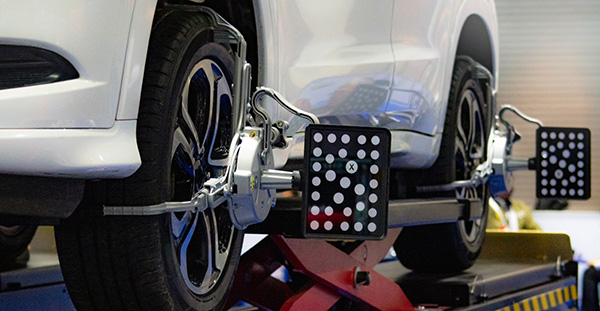
Uneven tire wear and a car that pulls to one side are good reasons to check wheel alignment. The alignment machine tells only part of the story, though. Worn suspension parts let the wheels move out of position while you're braking, turning, or crossing uneven pavement.
Imagine adjusting a wheel that's held by a badly worn control arm bushing. The angle looks right while the car sits still, then changes as soon as the suspension takes a load. Checking the steering and suspension first helps you avoid paying for an alignment while the same tire wear continues.
Why Suspension Condition Affects Wheel Alignment
A wheel alignment adjusts how the wheels sit relative to the vehicle and the road. Toe describes whether the tires point inward or outward when viewed from above. Camber describes their inward or outward tilt. Caster relates to the steering axis and affects steering feel and the wheel's tendency to return toward center.
Those angles are influenced by control arms, bushings, joints, springs, and other components. When everything holds its position properly, an alignment gives the tires a stable starting point. Loose hardware or worn parts allow the geometry to shift as the suspension moves.
Before adjusting the angles, the technician checks whether the parts holding each wheel are secure. A worn joint, torn bushing, or loose fastener needs attention first. That inspection gives the alignment a solid starting point and helps explain why some visits involve repairs before adjustments.
How Worn Control Arm Bushings Change Alignment
Control arm bushings help locate the suspension, allow movement, and absorb vibration. Over time, rubber deteriorates, splits, or separates from its mounting. Some designs also contain fluid, which can leak as the bushing wears.
Under braking, the tires push against the road and load those bushings. A damaged bushing allows excess movement, changing the wheel's position just when you need the car to stay predictable. You might notice a pull that appears mainly while slowing down or steering that feels loose on uneven pavement.
A pull that appears as you approach a Berkeley intersection gives us something specific to check. Does the wheel move backward under braking? Does a torn bushing let the control arm shift? Reproducing that movement is more useful than guessing from the tire wear alone.
Ball Joint and Tie Rod Wear Affects Steering
Ball joints allow the suspension to move while keeping the wheel assembly connected. Tie rods transfer steering movement to the wheels. Wear in either area creates play, and that play makes accurate wheel positioning harder to maintain.
Clunking, loose steering, or a steering wheel that needs constant small corrections are reasons to check these components. Excessive wear also raises a safety concern. A severely damaged joint or steering connection needs repair before the vehicle returns to regular driving.
These parts need a physical inspection and an alignment measurement. The technician checks joint movement against the limits for that suspension and supports the vehicle as the service procedure requires. Different designs load the joints differently, so one quick shake of the wheel can miss a problem.
Ride Height and Suspension Changes Affect Alignment
Springs carry the vehicle's weight and set its ride height. A broken spring or sagging corner changes the angles the alignment is built around. Height modifications and regular heavy loads also deserve attention. If you carry equipment in the trunk every day, mention that before the measurements begin.
Shocks and struts control how quickly the suspension moves. Worn dampers let the tires bounce and contribute to irregular wear. On many cars, the strut is also a structural suspension component, so replacing it calls for an alignment check to finish the job properly.
Tire Problems That Feel Like Bad Wheel Alignment
A pull also deserves a look at the tires. Unequal pressure changes how the vehicle rides and steers. Internal tire construction, damage, or uneven wear can produce a pull even when the measured alignment angles fall within range.
The shop will look at pressure, wear patterns, tire condition, and how the complaint changes on a road test. The road slope is part of that picture too. A car following a heavily sloped lane feels different from one pulling consistently on a flatter surface.
Useful details include:
- Whether the pull happens while cruising or braking
- Which tire edges are wearing faster
- Clunks after bumps, potholes, a curb strike, or recent suspension work
- Whether the steering wheel sits crooked on a straight road
You don't need to name the failed part before booking. Describe what the car does and when it happens. A pull during braking, a clunk after a pothole, and constant highway wander point to different things during the inspection.
Suspension Repairs Before a Wheel Alignment
If inspection finds a worn component affecting wheel position, the sensible order is repair, verification, then alignment. That sequence gives the adjustment a stable foundation and protects the tires you already own.
You should be able to see why a suspension repair was recommended. That might be excessive joint movement, a bushing that has separated, or a damaged spring. Ask which finding affects safety, which is causing tire wear, and which can be watched during future maintenance.
The final alignment and road test check that the steering wheel is centered and the car tracks properly. Tires that have already worn badly may still make noise or affect how the car feels. Discuss their condition too, so the repaired suspension and next set of tires get a fair start.
Wheel Alignment and Suspension Repair at Oceanworks Berkeley
Oceanworks Berkeley in Berkeley, CA, can help with pulling, loose steering, and uneven tire wear. Bring up any recent impact or suspension work when booking. We'll discuss what your car needs and whether suspension repair should come before a wheel alignment.
Schedule wheel alignment and suspension service with Oceanworks Berkeley before uneven wear shortens your tires' life.