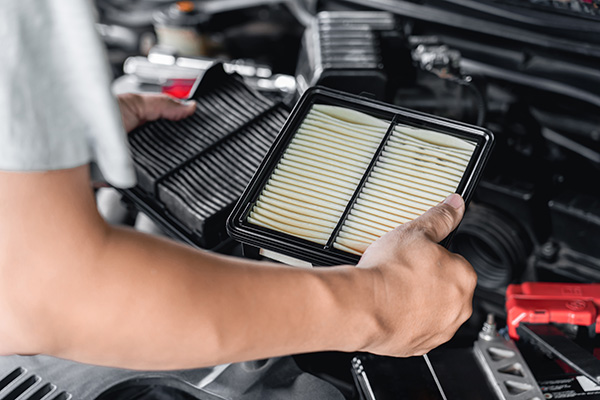
A check engine light and a dirty filter seem closely connected. After all, the engine needs clean air and fuel to run properly. Yet the dashboard warning doesn't work like a filter replacement reminder. It appears when the engine computer detects a problem in the systems it monitors. The connection between the filter and the warning depends on which filter is involved. Some have no connection at all.
Understanding the difference prevents an easy maintenance job from being mistaken for the entire repair.
Which Vehicle Filters Affect Engine Operation?
The engine air filter protects the intake from dust and debris.
The fuel filter or strainer, on vehicles equipped with a serviceable one, helps keep particles out of the fuel system. The oil filter protects the lubrication circuit. The cabin air filter belongs to the heating and air conditioning system and doesn't control combustion.
A clogged cabin filter reduces vent airflow but isn't a normal cause of the check engine light. The other filters are connected to systems that influence engine operation, although the computer generally doesn't measure dirt inside a filter directly. It responds to symptoms of restriction, incorrect pressure, or related electrical faults.
Dirty Engine Air Filters and Airflow Sensor Readings
A severely restricted engine air filter reduces the air reaching the engine, particularly under high demand. On certain vehicles, this creates an airflow performance fault or poor acceleration. The computer compares expected operating behavior with sensor readings and sometimes reports that something isn't matching.
But an airflow-related code doesn't automatically prove the filter is clogged. A contaminated mass airflow sensor, leaking intake boot, loose connector, or faulty throttle system produces overlapping symptoms. The filter's condition has to match what the airflow readings and intake inspection show. A dark filter that still seals correctly is often a routine maintenance item, not the reason for the warning.
Fuel Filters, Low Fuel Pressure, and Engine Faults
A restricted fuel filter, when the vehicle has a separate serviceable unit, limits how much fuel reaches the engine under certain operating conditions. Some drivers notice hesitation, weak power, or difficult starting. Low fuel delivery sometimes makes the engine computer record lean or misfire faults.
These symptoms also come from failing fuel pumps, injector problems, electrical faults, and vacuum leaks. Pressure and volume testing help identify the actual restriction. Would a restricted fuel filter feel the same as an intake problem from behind the wheel? Many newer gasoline cars have filters integrated with the fuel pump assembly and no routine filter replacement interval. Installing an unnecessary fuel filter or pump won't solve a fuel pressure problem elsewhere.
Why an Air Filter Change Sometimes Triggers a Warning
It sounds backward, but a light appearing immediately after filter service often points toward an installation issue. Common culprits include a loose clamp, an unlatched airbox cover, or a cracked intake duct. If unmeasured air enters beyond the airflow sensor, the engine compensates by changing fuel delivery. We inspect the gasket, housing clips, intake boots, and electrical connectors near the filter. Sometimes reseating a hose solves the issue. The important step is verifying the fault, not blaming the new filter simply because it was the last part touched.
When a warning starts right after service, we revisit the airbox clips and nearby connectors first.
Common Check Engine Light Codes Linked to Intake Problems
A lean mixture code such as P0171 or P0174 often points toward an air-fuel imbalance.
An airflow performance code such as P0101 directs testing toward the airflow measurement system. These codes aren't interchangeable with a filter service reminder, and their interpretation depends on the vehicle. Fuel and ignition faults also trigger misfire codes. We check freeze-frame data and live readings, then test the components connected to the symptoms. Replacing the most familiar component mentioned online is not a sound plan, especially when the computer is reporting a system-level fault.
What the Driver Should Check Before Scheduling Service
Don't remove an unfamiliar intake component if the engine is hot or running. You can still record several helpful observations for us:
- When the check engine light appeared
- Any recent air or fuel filter service
- Changes in acceleration or idle quality
- The exact trouble code from a prior scan
- Loose-looking airbox clips or hoses
A flashing check engine light with severe shaking signals a potentially damaging misfire. Stop safely and arrange prompt help. A steady light also calls for testing, but the symptom and fault information determine the next steps.
Testing the Filter and Confirming the Actual Fault
A complete inspection looks at the relevant filter, its housing, pressure or airflow data, and any damaged or disconnected components. Which checks help us confirm that the filter caused the warning? Depending on the evidence, we use smoke testing, electrical measurements, fuel pressure checks, or a controlled road test.
After repair, confirming that the monitored system operates normally is just as important as clearing the warning. A fresh filter doesn't restore fuel pressure from a failed pump, and a new sensor won't seal a cracked intake tube. Maintenance and fault testing work together, but they are not the same job.
Our testing follows the code and the way the engine runs, not a guess based on the age of the filter.
Engine Filter and Warning Light Checks in Berkeley, CA
At Oceanworks Berkeley in Berkeley, CA, we inspect intake filters, related connections, and engine warning information to find out what's behind a check engine light. When replacement is due, the filter's condition and the vehicle specifications guide the service.
A warning light is a reason to investigate what the engine detected, not an invitation to replace every filter under the hood.