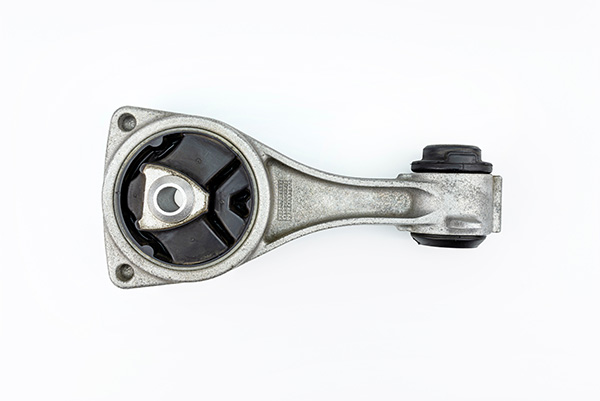
Engine and transmission mounts do more than hold the drivetrain in place. They also isolate much of the vibration the engine produces and control how far the drivetrain moves when you accelerate, brake, or shift gears.
As the rubber inside a mount softens, cracks, or separates, that control begins to disappear. The change can be gradual, so drivers sometimes get used to the extra vibration or clunking without realizing something has worn out. These five symptoms are among the ones we pay closest attention to.
1. You Feel More Vibration at Idle
One of the first signs of a worn mount is extra vibration while the vehicle is stopped with the engine running. You may feel it through the steering wheel, seat, floor, or brake pedal, especially when the transmission is in Drive and your foot is on the brake.
Mounts use rubber or fluid-filled sections to absorb normal engine movement before it reaches the body. Once that material deteriorates, more vibration passes directly into the cabin. At our shop, we compare vibration in Park, Neutral, and Drive because how it changes under load can help distinguish a mount problem from an engine that is simply running rough.
2. You Hear a Clunk When Shifting Into Drive or Reverse
A noticeable thump when you move the shifter from Park into Drive or Reverse can come from excessive drivetrain movement. The engine and transmission naturally move a little as torque changes direction, but healthy mounts keep that movement controlled.
When a mount tears or collapses, the drivetrain can shift far enough that a bracket, exhaust component, or other part makes contact. You may hear one solid clunk when selecting a gear or another when taking off from a stop. A transmission problem can also create harsh engagement, so we look at actual engine movement before blaming the mount or transmission.
3. The Engine Moves Too Much During Acceleration
A worn mount can become much more obvious under load. You may feel a bump or lurch as you accelerate, then another movement when you lift off the throttle.
With the vehicle safely positioned, a technician can observe how much the engine moves under load. Excessive rocking can reveal a mount that has separated internally, even if the rubber doesn't look badly damaged from above. An inspection can also show whether a broken mount has allowed the drivetrain to pull on hoses, wiring, intake tubing, or exhaust connections.
Too much movement puts extra strain on parts that were never designed to act like restraints for the engine. Catching the problem early can prevent a worn mount from creating another repair somewhere nearby.
4. You Notice New Rattles or Exhaust Contact
The exhaust system connects to the engine but is supported separately underneath the vehicle. It needs enough flexibility to accommodate normal drivetrain movement without striking the body or suspension.
If an engine or transmission mount becomes weak, the exhaust can shift farther than intended during acceleration or braking. That can create a metallic rattle, knocking sound, or vibration that seems to come from underneath the car. In some cases, repeated excessive movement can also stretch or damage a flex pipe.
That is why we don't automatically repair the exhaust when the visible problem is a cracked flex section or broken hanger. If the drivetrain moves too far, the mount may be why the exhaust part failed in the first place.
5. The Vehicle Feels Different When Starting, Stopping, or Changing Gears
Worn mounts can change the overall feel of the car even before they make a loud noise. You might notice a small jolt when pulling away from a stop, a bump when coming off the accelerator, or a heavier movement as an automatic transmission changes gears.
Manual-transmission vehicles can feel different too. A weak transmission mount can make clutch engagement feel less settled because the drivetrain moves as torque is transferred through it. None of these sensations alone proves a mount has failed, but when they appear together with vibration or clunking, the mounts deserve a careful look.
Regular maintenance gives us a chance to catch cracking, leaking fluid-filled mounts, loose hardware, and other signs before the mount completely separates.
Not Every Vibration Means a Mount Is Bad
Engine misfires, low idle speed, worn suspension parts, exhaust contact, and even damaged tires can create vibrations that feel similar from inside the cabin. Replacing mounts without confirming the source can leave the original problem unchanged.
We check mount condition, engine movement, where you feel the vibration, and when it appears. A collapsed hydraulic mount may leak fluid or sit lower than the others, while a torn rubber mount can allow obvious movement under load. The pattern helps us decide whether the mount is actually responsible.
Get Engine and Transmission Mount Service In Berkeley, CA, With Oceanworks Berkeley
If your vehicle has developed extra vibration, clunking during gear changes, or excessive engine movement, Oceanworks Berkeley in Berkeley, CA, can check the engine mounts, transmission mounts, brackets, and surrounding drivetrain components.
Schedule a mount check before excessive drivetrain movement starts damaging exhaust parts, hoses, wiring, or other nearby components.