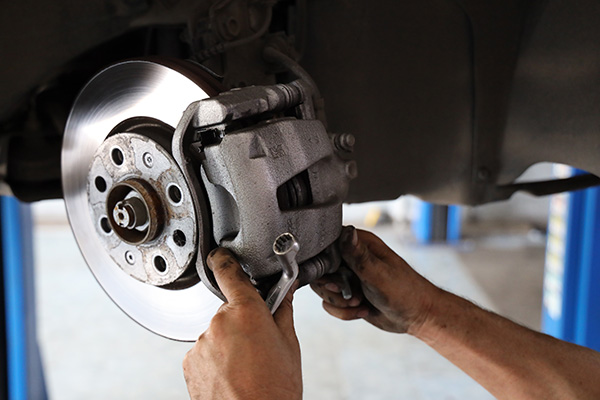
A sticking brake caliper can be tricky because the car may still stop, and the problem can feel like a mild annoyance at first. You might notice the vehicle does not coast the way it used to, or one wheel seems to get dirty faster than the others. Then one day, you catch a hot, sharp smell after a short drive and realize something is dragging.
If you learn the early clues, you can catch a sticking caliper before it cooks a rotor, ruins a set of pads, or leaves you with a pull that makes driving stressful.
What A Brake Caliper Does And What Goes Wrong
The caliper is the part that squeezes the brake pads against the rotor when you press the brake pedal. When you release the pedal, the caliper should let the pads back off so the wheel spins freely again. A sticking caliper happens when the release does not fully happen, so the pad keeps rubbing the rotor.
This can be caused by a binding caliper piston, seized slide pins, a restricting hose, or hardware that is not moving freely. The end result is the same, heat builds, wear accelerates, and the car can start acting odd in ways that are easy to misread.
Early Signs A Caliper May Be Sticking
The earliest signs are often small changes you notice in daily driving. The car may feel like it takes more throttle to get moving, especially after you have driven for a bit. You might also notice a slight pull to one side, not all the time, but more often when braking gently.
Pay attention to these patterns:
- One wheel produces heavier brake dust than the others
- A burning smell after driving, especially after a stop
- The car feels less willing to coast when you lift off the gas
- A faint scraping sound that comes and goes with wheel speed
- Steering pull that get worse after a longer drive
If more than one of these shows up together, caliper drag becomes a strong possibility.
A Symptom Timeline: Mild Drag To Overheating
A caliper issue often starts as mild drag that you barely feel. At this stage, the pads wear faster than normal, but the driver may only notice slightly lower fuel mileage or a wheel that gets dirtier. As heat builds, the rotor can develop heat spots, and the braking feel can change, sometimes becoming grabby or inconsistent.
If it keeps going, you may feel vibration during braking, hear louder grinding, or notice the car pulling more sharply to one side. In the later stage, the wheel can get hot enough to smell strongly, and in extreme cases, you can see heat discoloration on the rotor or feel excessive heat radiating from one corner after a short drive.
Simple Clues You Can Check Without Tools
You do not need fancy equipment to notice some helpful clues, you just need to be cautious. After a normal drive without hard braking, stand near each wheel and see if one corner radiates noticeably more heat. Do not touch the wheel or rotor, just use your hand near the wheel to compare heat.
Also look at brake dust patterns. If one front wheel is consistently much darker than the other, or one rear wheel is unusually dirty, that can suggest one pad is wearing much faster. If the car pulls more after you have been driving for a while, that can also fit, because heat makes the sticking worse.
Common Causes Behind A Sticking Caliper
A lot of caliper problems are not the caliper body itself, they come from parts that support caliper movement. Slide pins are a big one. If pins seize from rust or dried lubricant, the caliper cannot center properly, so one pad drags and wears down quickly.
Brake hoses can cause issues too. A damaged hose can act like a one-way valve, allowing pressure to apply the brake but not allowing it to release fully. That can create a situation where the brake feels fine at first, then starts dragging more as you drive.
We also see piston seals wear or swell over time. When the seal does not retract the piston properly, the pad stays closer to the rotor than it should. Add moisture, road salt, and heat cycles, and sticking becomes more likely.
What Not To Do If You Suspect Dragging Brakes
Do not ignore a burning smell or keep driving long distances, hoping it will cool off. Heat is what damages rotors, pads, and wheel bearings, and it can also affect brake fluid. Avoid spraying water on a hot rotor to cool it down, the sudden temperature change can crack rotors and create new vibration.
Also, avoid replacing pads unless the caliper is sticking. Pads can be ruined by heat quickly, but if the caliper or pins are still binding, the new pads will wear fast too. The real fix is freeing the movement and confirming the brake releases properly.
How We Confirm A Sticking Caliper In The Shop
We look for uneven pad wear, heat evidence, and signs that the caliper is not moving freely. We also check slide pin condition and lubrication, piston movement, and rotor condition. If a hose restriction is suspected, we can confirm whether pressure is releasing as it should.
The key is verifying the cause, because sticking can come from pins, piston, hose, or hardware. Fixing the correct piece prevents repeat repairs and keeps braking feel consistent.
Get Brake Service in Berkeley, CA, with Oceanworks Berkeley
We can inspect your brakes, confirm whether a caliper is sticking, and fix the root cause so you are not burning through pads and rotors unnecessarily. We’ll also check the opposite side for wear balance and make sure your braking stays predictable.
Call Oceanworks Berkeley in Berkeley, CA, to schedule a brake inspection and stop caliper drag before it turns into a bigger repair.